Remember your first day at a new job? The flurry of new faces, the mountains of paperwork, the vague promise of 'you'll get the hang of it'? For many, that initial welcome, or lack thereof, sets the tone for months to come.
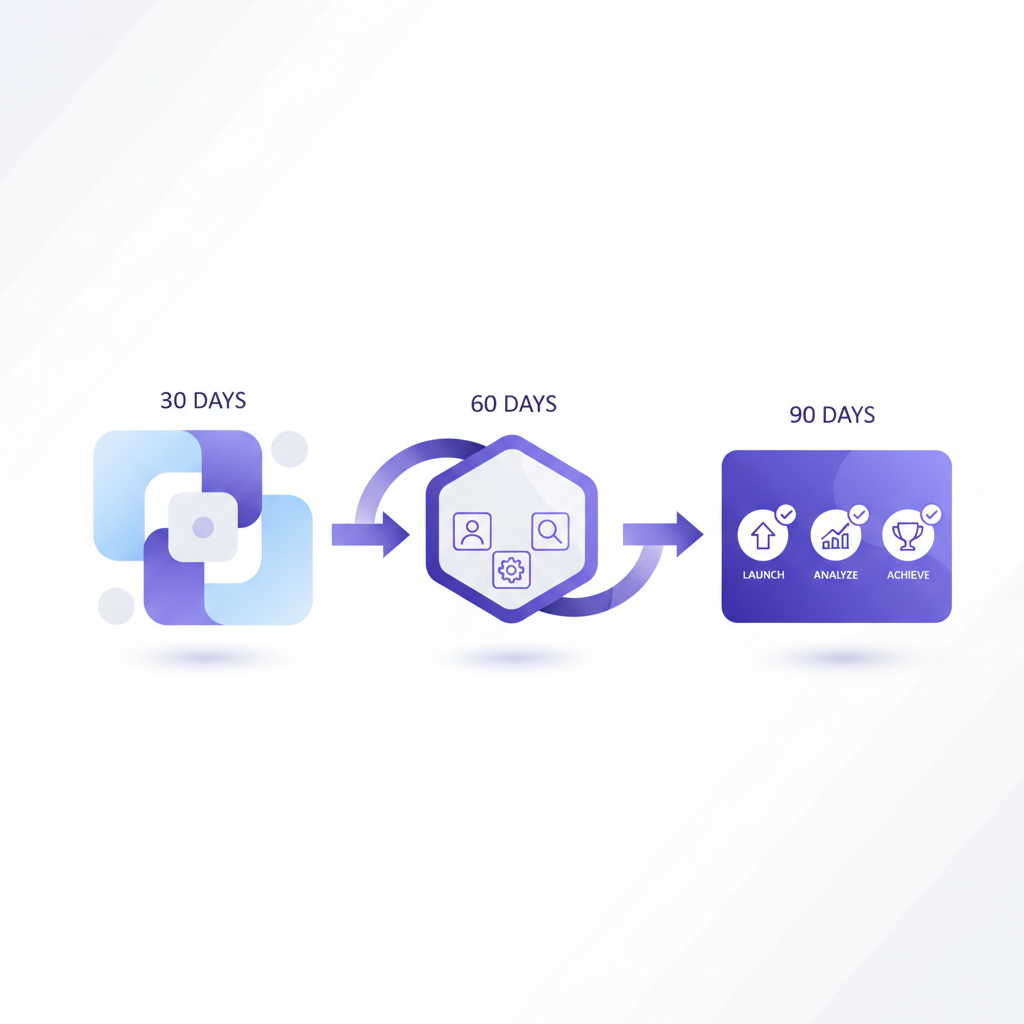
We all know the 30-60-90 day onboarding plan. It’s a staple in HR playbooks and management guides, promising a structured path for new hires to ramp up. But here’s the thing: most of these plans, while well-intentioned, fall flat. Why? Because they're often too generic, too theoretical, and utterly devoid of the actionable specificity a new employee desperately needs.
The Problem with Vague Goals
Imagine telling a new sales representative, 'By day 30, understand our CRM.' What does 'understand' even mean? Does it mean they can log in? Can they create a contact? Can they generate a report for a specific client segment? Without breaking it down, it's just a fuzzy goal that leaves both the new hire and their manager guessing.
This isn't just about semantics; it's about clarity and measurable progress. The truth is, a plan that simply lists broad objectives like 'learn company culture' or 'contribute to team projects' is less a roadmap and more a wish list. It puts the onus entirely on the new hire to figure out the path, which is exactly what a good onboarding plan should prevent.
Making the First 30 Days Count: Immersion & Foundation
Let's get practical. The first 30 days are about immersion. It's not about being productive in the traditional sense, but about setting the stage for future productivity. This is where foundational knowledge is absorbed, key people are met, and the cultural landscape begins to take shape.
Instead of 'Understand company tools,' try:
- Week 1: Complete interactive tours on our internal communication platform (Slack/Teams) and project management tool (Jira/Asana). Create your first project ticket and send a team message introducing yourself.
- Week 2: Complete the 'Navigating Salesforce for New Reps' interactive tour. Successfully add 5 new leads and update 3 existing accounts.
- Week 3: Review the top 5 most common customer support tickets in our knowledge base. Shadow a senior team member on 3 live customer calls, taking notes on common objections and resolutions.
- Week 4: Read our core product documentation (link to specific guides). Complete a short quiz on key product features and their benefits.
Notice the shift? We've gone from a vague 'understand' to verbs that imply specific actions and measurable outcomes: 'complete,' 'create,' 'add,' 'update,' 'review,' 'shadow,' and 'read.' This makes expectations clear and progress trackable.
Days 31-60: From Learning to Contribution
By day 60, your new hire should be moving from consumption to contribution. They're no longer just learning; they're starting to apply that knowledge and engage with real work, albeit with support.
Instead of 'Contribute to team projects,' let's refine it:
- Week 5-6: Take ownership of a low-stakes internal project. For a customer support role, this might be updating an FAQ document based on common inquiries. For a marketing role, it could be drafting a social media post series or a blog outline.
- Week 7-8: Independently handle 5-10 customer inquiries (with a senior team member available for support). Successfully resolve at least 80% of them without escalation.
- Mid-60 Day Review: Meet with your manager to discuss progress, challenges, and adjust priorities for the next 30 days. This isn't just a check-in; it's a data-driven conversation about performance against specific objectives. Have they completed their assigned courses? What were their completion rates on interactive tours?
This phase is about proving the learned skills in a practical setting, building confidence, and getting comfortable with making initial contributions to the team's objectives.
Days 61-90: Integration & Autonomy
The 90-day mark is often when a new hire becomes a fully integrated, contributing member of the team. They should be operating with a high degree of autonomy and starting to think strategically about their role and its impact.
Instead of 'Act as a full team member,' try:
- Week 9-10: Identify one workflow or process within your area that could be improved. Develop a concise proposal for how to streamline it, outlining the problem, proposed solution, and expected impact.
- Week 11-12: For a sales role, independently manage a small pipeline of leads, aiming for 2-3 qualified meetings. For a product role, draft initial requirements for a small feature enhancement.
- 90-Day Performance Review: A comprehensive review of performance against all objectives set in the plan. Discuss career development goals and identify areas for continued growth. This is also where we confirm the completion of all compliance training, with immutable records for audit purposes – something we know is critical for many enterprise teams.
The Secret Sauce: Interactive Guidance & Tracking
How do you actually deliver all this specific guidance without drowning your new hires in PDFs or assigning a full-time mentor for every onboarding? This is where modern tools shine. We’ve found that the most effective way to ensure specificity and completion is through interactive, guided training.
Imagine rather than just a checklist item saying 'Learn Salesforce,' your new hire clicks a link and an interactive tour launches directly over your live Salesforce instance. It guides them click-by-click through adding a lead, updating an opportunity, or running a report. This isn't just watching a video; it's doing, in context, with real-time feedback.
This approach lets us:
- Define clear pathways: 'Complete Tour A, then Tour B' within a structured course.
- Track progress precisely: Did they finish the tour? Did they click the right elements? Did they acknowledge compliance?
- Provide immediate context: The training happens exactly where the work happens, even on third-party tools like HubSpot or SAP.
- Link directly to knowledge: If a step needs more context, we can link directly to an SOP document housed in a central knowledge base.
Beyond the Plan: Continuous Improvement
A 30-60-90 plan isn't a static document; it's a living guide. Gather feedback from new hires regularly. What steps were confusing? What information was missing? Use completion analytics to identify bottlenecks or areas where new hires consistently drop off. This iterative approach means your onboarding process gets better with every new person who joins your team. It's a continuous investment that pays dividends in retention, productivity, and overall team morale.
Designing a 30-60-90 day onboarding plan that actually works means swapping vague aspirations for concrete, measurable actions. It means empowering your new hires with guided, interactive experiences and giving managers the tools to track progress and provide targeted support.
Ready to build a 30-60-90 plan that sets your new hires up for undeniable success? We've put together a comprehensive template to help you get started, packed with examples and actionable prompts. You can find it in our Academy Hub.
And if you're looking to bring those interactive guides to life on any website, including the third-party tools your team relies on daily, you can explore what Beacon can do at dobeacon.com/signup.