
It’s a scenario we've all seen: a user signs up, breezes through the initial welcome tour, maybe even completes a key action, and then… silence. They've crossed the onboarding finish line, but they haven't started running the race. In fact, studies often show a significant drop-off in user activity just weeks after initial signup. Why? Because truly engaged users aren’t made in a single onboarding sprint; they're cultivated over time.
Here at DoBeacon, we spend our days thinking about how to help people genuinely connect with tools and systems. And what we've learned is that the 'post-onboarding' phase isn't a passive waiting game; it's where the real magic (or misery) happens. It’s where users either discover lasting value or quietly slip away.
Why Traditional Onboarding Isn't Enough
Think about it like teaching someone to ride a bike. You don't just explain the pedals and handlebars, give them a push, and walk away. That initial push, the 'onboarding,' gets them moving. But true learning – staying upright, steering confidently, even enjoying the ride – comes from continued practice, gentle guidance, and perhaps a reassuring hand when they wobble.
Many products treat onboarding like that single push. They front-load all the feature explanations, celebrate the first completed task, and then assume the user is good to go. The problem is, competence isn't just about knowing features; it's about applying them to solve real problems, consistently and efficiently. That's where advanced engagement strategies come in.
Our team believes that the most effective user engagement isn't about 'forcing' interaction; it's about proactively enabling value. It's about helping users feel competent and successful at every stage of their journey, not just the beginning.
Shifting Focus: From Activation to Achievement
So, what does advanced user engagement look like after the welcome screen? It's about moving beyond simple feature adoption and focusing on helping your users achieve their personal and professional goals using your product. It’s a subtle but powerful shift from merely teaching them what your tool does, to showing them how it makes their life better, easier, or more productive.
Strategy 1: Contextual, Just-in-Time Learning Paths
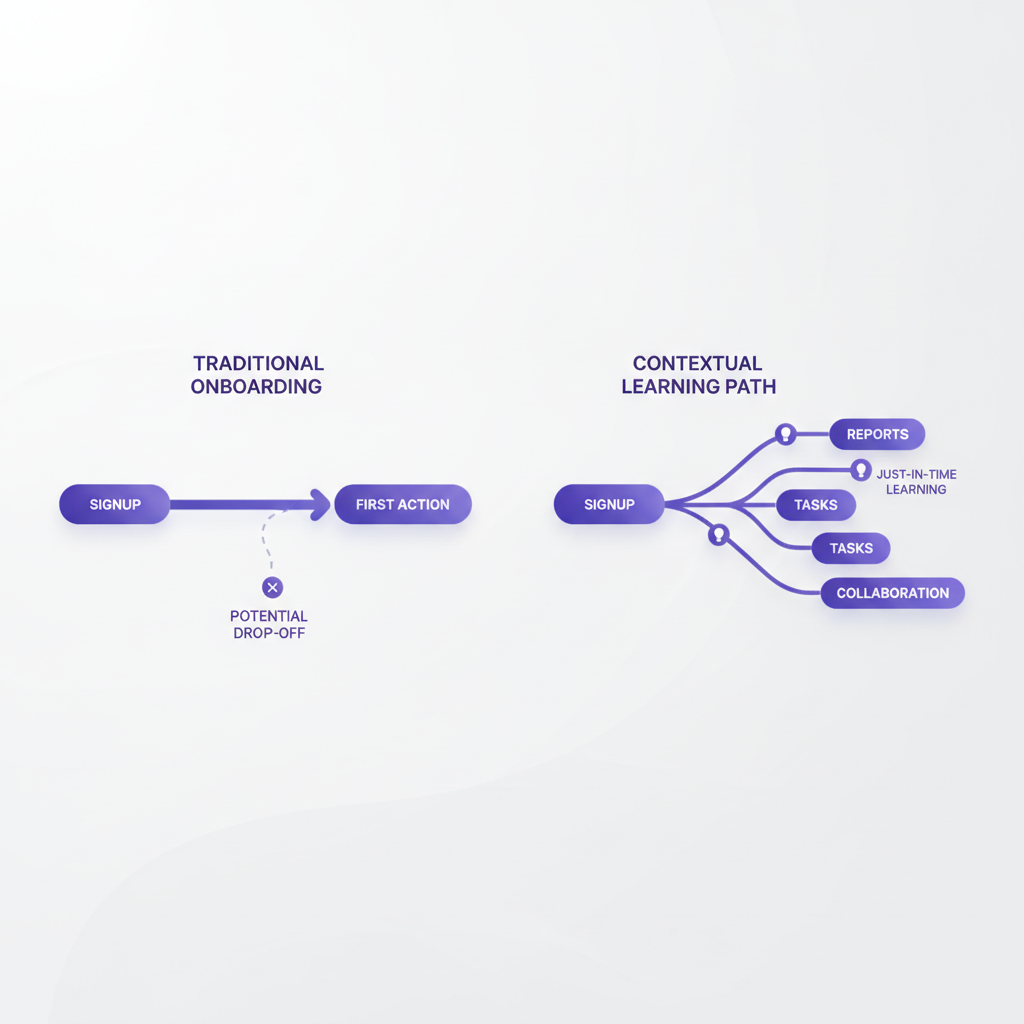
Most onboarding is linear. "Do Step 1, then Step 2, then Step 3." But real-world usage isn't always linear. A marketing manager might only need the reporting features once a month, while a content creator uses the publishing tools daily. Pushing all information at once is overwhelming and irrelevant for many.
Advanced engagement means delivering educational content, tips, or prompts exactly when and where they're most relevant. Imagine a project manager in a new SaaS tool who starts creating their third project. Instead of waiting for them to ask for help, the tool could proactively suggest an advanced template, or a quick video on "Optimizing Project Workflows with Custom Fields." This isn't nagging; it's enabling.
DoBeacon tracks tour engagement events, such as tour starts, step views, and feedback submissions, which can help inform patterns and moments of opportunity. You can then trigger micro-trainings, short guides, or even peer success stories directly within the product interface or via targeted emails. This approach makes learning feel less like a chore and more like a helpful nudge from a mentor.
Strategy 2: Fostering Competence, Not Just Awareness
There's a big difference between knowing a feature exists and knowing how to wield it powerfully. Many users, even after initial onboarding, only scratch the surface of a product's capabilities. They might use 20% of the features to get 80% of the value, which isn't bad, but it leaves so much untapped potential.
We encourage our clients to design "competence-building challenges" or "mastery missions." For instance, if you have a complex CRM, don't just tell a sales rep about the custom reporting feature. Challenge them to "Build your first sales pipeline forecast report" with a step-by-step guide and examples. Or for a design tool, prompt them to "Create a re-usable brand template in under 15 minutes."
These challenges provide clear objectives and allow users to actively apply what they've learned, building muscle memory and confidence. DoBeacon can track the completion of these challenges and even unlock access to more advanced courses or tours within DoBeacon upon success. It turns learning into an engaging progression, not just a static instruction manual.
Strategy 3: Building Feedback Loops and Peer-to-Peer Learning
Engagement isn't a monologue from product to user; it's a conversation. Active feedback channels after onboarding are essential. This doesn't just mean a "contact support" button. It means actively soliciting input on specific features, understanding workflows, and identifying areas of confusion or friction that might not appear in initial usage data.
Beyond direct feedback, facilitating peer-to-peer learning can be incredibly powerful. Imagine connecting an experienced user with a newer one who's struggling with a particular use case. Or creating user-generated content sections where power users share their unique workflows and tips.
We've seen communities form around products where users feel heard and valued, not just as customers, but as contributors.
DoBeacon lets you use DoBeacon.identify() to associate users with groups and their plan. This allows you to deliver relevant content, invite specific groups to beta test new features, participate in targeted surveys, or control access to exclusive knowledge base documents and training where they can connect with peers facing similar challenges. It transforms users from passive recipients into active participants in your product's evolution.
The DoBeacon Difference: Orchestrating Ongoing Success
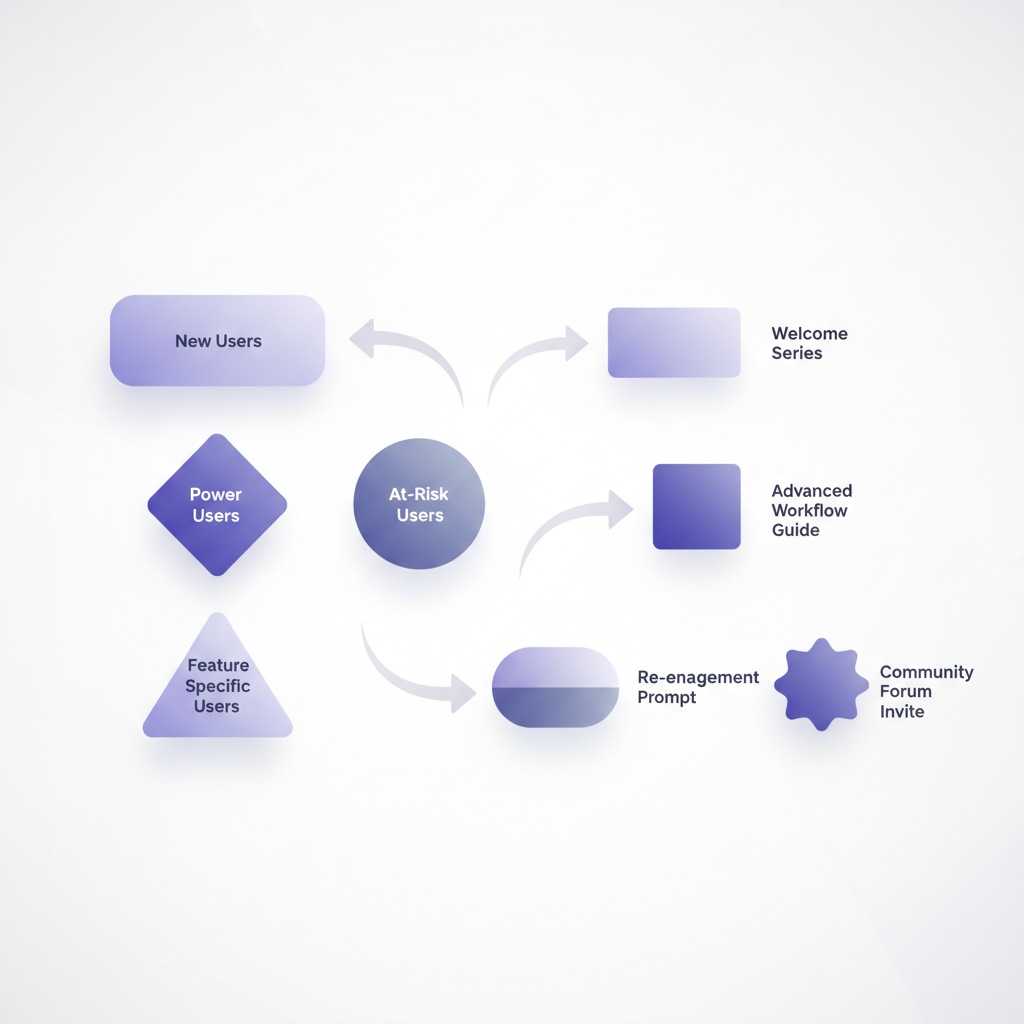
Implementing these advanced strategies manually is incredibly complex. It requires deep insights into user behavior, robust segmentation capabilities, and the ability to automate highly personalized communication across multiple channels. This is precisely where a tool like DoBeacon shines.
We provide the platform to:
- Understand behavior: Track tour starts, steps viewed, completions, dismissals, and feedback submissions.
- Segment intelligently: Group staff members using DoBeacon's
groupsfeature and target users based on theirplanandgroupsusingDoBeacon.identify(). - Personalize at scale: Deliver the right message, the right training, or the right challenge to the right user at the right time.
- Automate workflows: Set up sequences of engagement that adapt based on user actions, ensuring consistent support without constant manual intervention.
With DoBeacon, you're not just throwing information at users; you're building intelligent pathways that guide them from initial curiosity to genuine mastery and loyalty. You're creating an environment where success isn't just possible, but inevitable.
Ready to Re-Think Your Post-Onboarding Engagement?
We've put together a comprehensive Post-Onboarding Engagement Strategy Checklist to help you map out your next steps. It covers everything from identifying key success milestones to designing contextual learning pathways. Download it for free today and start turning passive users into passionate advocates!
If you’re curious to see how DoBeacon can help you implement these strategies, you can also explore more about our platform at https://dobeacon.com/signup.