
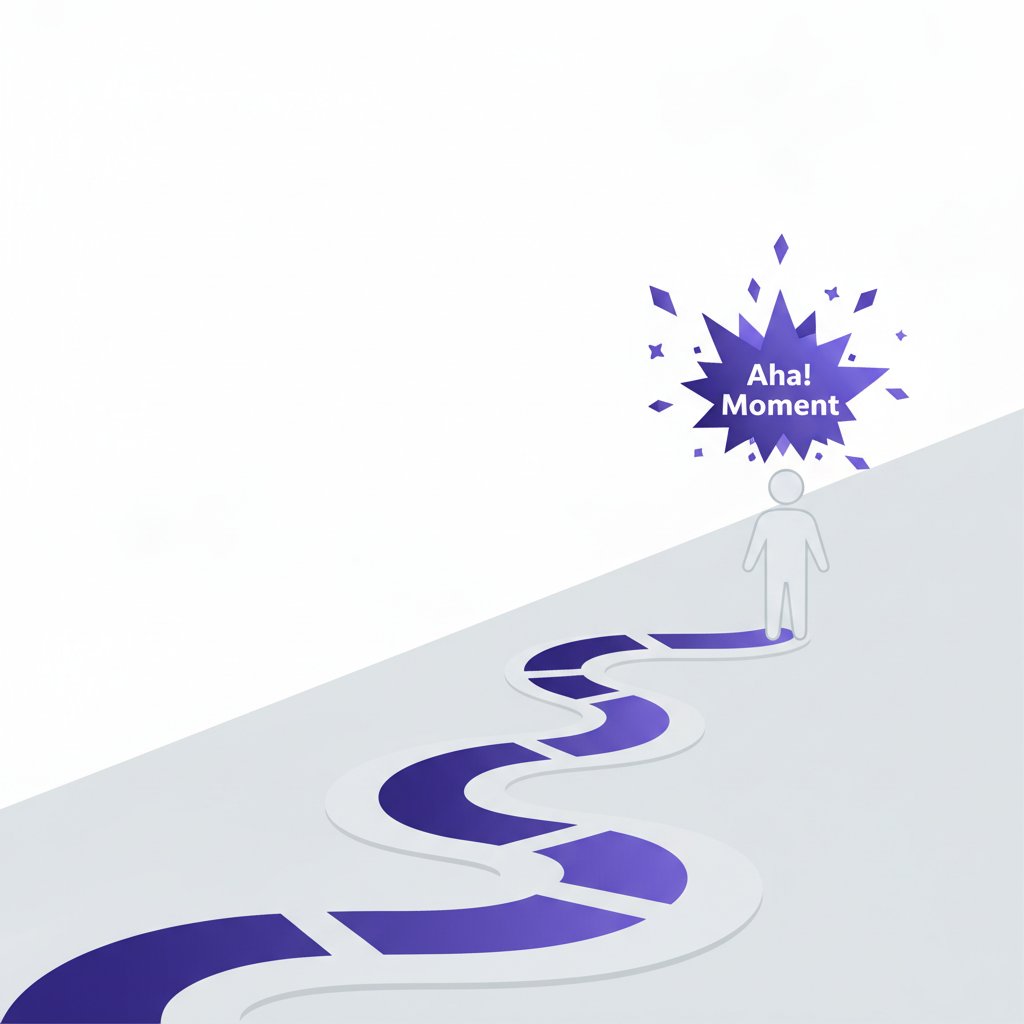
Think back to the last time you tried a new app or software. Maybe it was a project management tool, a new design platform, or even just a recipe app. For many of us, there's a moment when it just clicks. You realize, "Oh! This is what it's for! This is going to make my life easier!"
That's the 'Aha! Moment'. And if we, as a training team, had to pick one psychological concept that's most important for successful user onboarding, this would be it. It's that flash of understanding where the user connects the dots between your product's features and a personal problem it solves for them. It's the point where they grasp the value.
Why the 'Aha! Moment' Isn't Just a Buzzword
It’s easy to dismiss these kinds of terms as marketing fluff, but the 'Aha! Moment' is incredibly real and deeply impactful. Research consistently shows that users who experience this moment early in their journey are significantly more likely to stick around, become paying customers, and even evangelize your product. Conversely, users who don't 'get it' quickly are very likely to churn, no matter how amazing your feature set is.
We see it all the time in our training sessions. People can sit through a demo, nod along, and understand the features, but until they experience how those features solve their specific pain point, the product remains an abstract concept. It's the difference between hearing about a delicious meal and actually tasting it.
Consider a brand-new marketing specialist onboarding to an email automation platform like Mailchimp or HubSpot. They might learn how to create a list, design a template, or set up a campaign. But their true 'aha!' moment probably happens when they send their first actual email to a segment of their audience and see the open rates come in. Or, for a new sales rep using a CRM like Salesforce, it’s not just understanding how to log a call, but logging their first call, seeing how it updates the contact record, and then running a report that shows them their entire week's outreach efforts in one neat visualization.
It's Less About Finding, More About Guiding
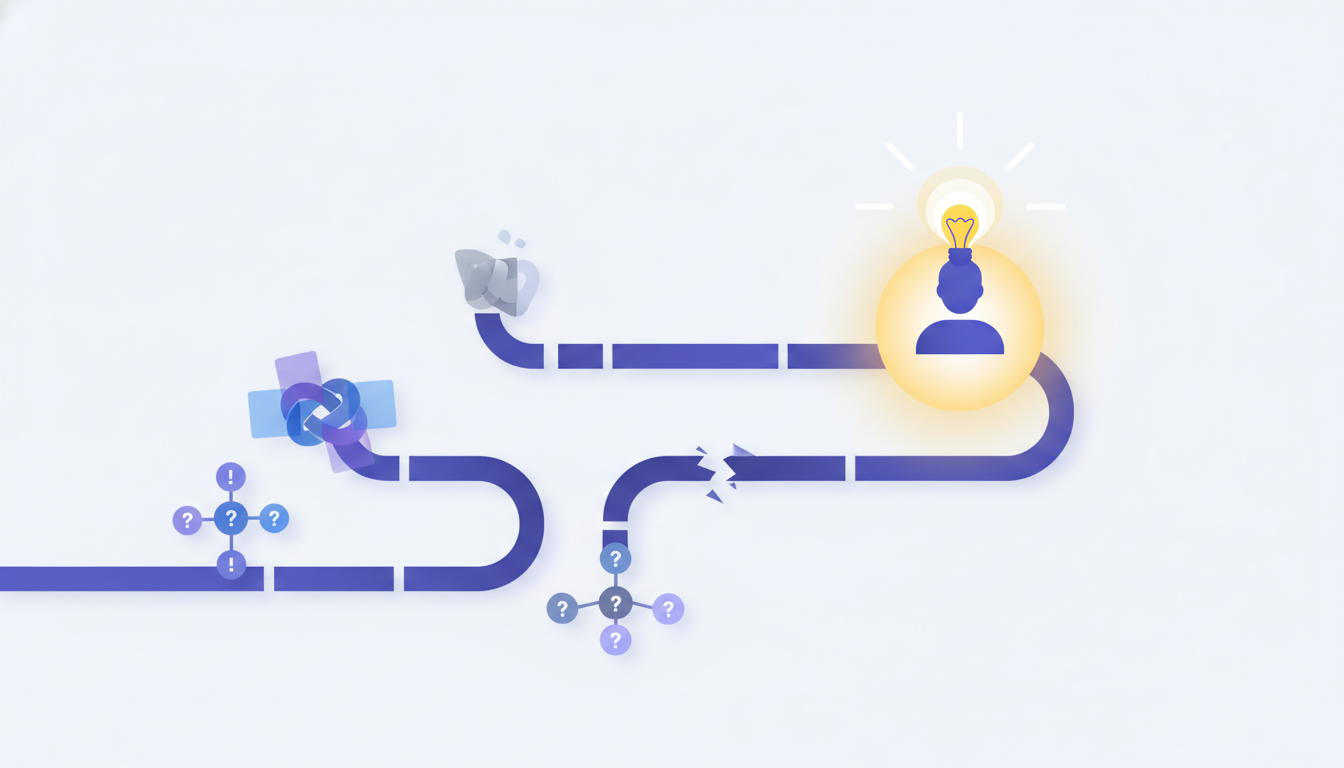
Now, here’s a slightly counterintuitive take: the 'Aha! Moment' isn't some magical, elusive feature you hope users stumble upon. It's something you can — and should — intentionally design for. It's about reducing the noise and guiding users directly to that core value experience.
Think of it like learning to ride a bike. No one hands you a manual and says, "Figure it out." Instead, someone holds the back of the seat, guides you through those first wobbly pushes, and then lets go at just the right moment, knowing you've got the momentum to keep going. They don't force you; they enable you.
Many products make the mistake of overwhelming new users with all their features, hoping one of them will resonate. This is like throwing a novice swimmer into the deep end of the pool. Instead, we want to gently lead them to the shallow end, show them how to float, and let them feel the buoyancy for themselves. This builds confidence and competence.
Designing for the 'Aha! Moment'
So, how do you design this experience? We typically break it down into a few steps:
- Identify Your Product's Core Value Prop: What's the single most important thing your product does for your ideal user? For a note-taking app, it might be capturing an idea quickly and finding it later. For a collaboration tool, it might be completing a small task together seamlessly.
- Map the Shortest Path to That Value: What's the absolute minimum number of steps a user needs to take to experience that core value? Strip away every unnecessary click, every optional setup step. Don't worry about them exploring advanced features yet.
- Anticipate Friction and Offer Help: Where do users typically get stuck? Are there complex forms, unfamiliar terminology, or too many choices? These are the points where you need to provide extra guidance.
This is where product tours become incredibly powerful, but not just any product tour. We're talking about intelligent, contextual product tours.
DoBeacon: Guiding Users to Their Personal 'Aha!'
At DoBeacon, we've built our platform specifically to help you create onboarding experiences that lead users to their 'Aha! Moment' faster and more reliably. Instead of generic walkthroughs that show off every button, DoBeacon lets you build tours that:
- Focus on Actionable Steps: We guide users through a specific workflow to complete a meaningful task. For our Mailchimp example, it would be 'send your first email campaign' rather than 'here's where the list menu is'.
- Provide Contextual Help: If a user gets stuck on a particular field, a DoBeacon tour can pop up with a tooltip explaining exactly what's needed, right then and there.
- Celebrate Small Wins: As users complete steps, DoBeacon features can help you reinforce their progress. For example, you can provide immediate feedback after a quiz step with
correctFeedbackmessages, and offer visual indicators of progress to build momentum towards that bigger 'aha!'
Imagine a new HR manager using a new employee management system. Their 'aha!' moment might be successfully running a compliance report for the first time, seeing all the necessary data compiled effortlessly. A DoBeacon tour wouldn't just show them where the reporting module is; it would walk them through selecting the right filters, generating the report, and understanding the output, step-by-step, until they see that crucial document appear.
 It’s about turning the abstract into the concrete, the potential into the practical. When users feel capable and empowered because they've solved a real problem with your tool, they're not just using a product – they're integrating it into their workflow, making it indispensable.
Ready to help your users discover their own 'Aha! Moments' and build a truly impactful onboarding experience? We've put together a free, downloadable guide with templates to help you map out your product's core value and design a user journey focused on early success. You can grab your copy here: [Link to Free Guide - e.g., "Download Our 'Aha! Moment' Mapping Template"].
And if you're curious about how DoBeacon can bring these maps to life with interactive product tours and contextual guidance, you can explore our platform and even try it out at https://dobeacon.com/signup.