
Imagine this: you've built an incredible new internal tool or launched a game-changing feature in your product. You design the perfect onboarding tour, covering every single detail your users could possibly need. You walk them through step-by-step, ensuring they 'complete' every module. Yet, a week later, many users haven't adopted the tool, and some haven't even finished the initial tour.
Sound familiar? We've all been there. It's frustrating to pour so much effort into teaching, only to see engagement drop off. Our instinct is to overload new users with everything they need to know right away. We try to make the learning experience as complete as possible. But what if that very completeness is actually working against us?
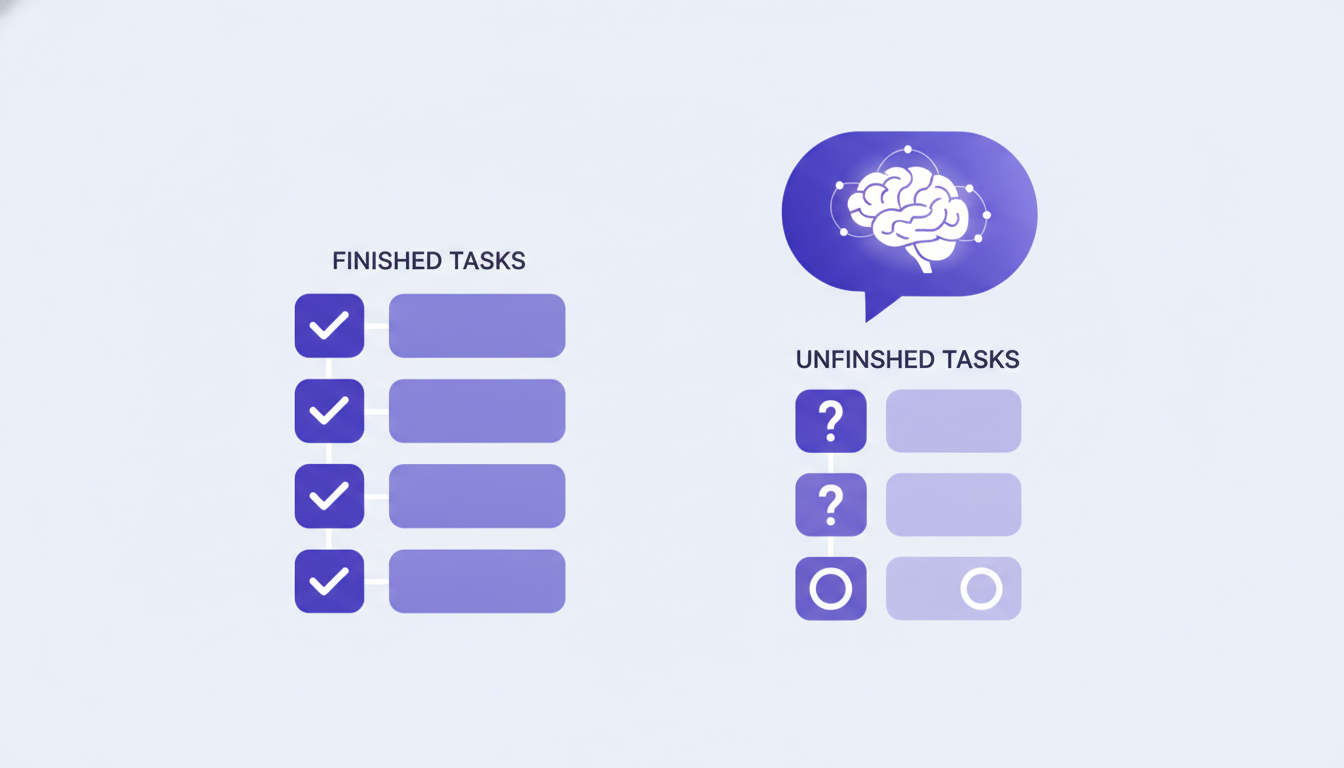
That's where a fascinating bit of psychology called the Zeigarnik Effect comes in. It suggests that people remember incomplete or interrupted tasks better than completed ones. It's why cliffhangers in TV shows keep you thinking about the next episode, or why you can't stop pondering a puzzle you haven't quite solved yet.
What Exactly is the Zeigarnik Effect?
Back in the 1920s, a Russian psychologist named Bluma Zeigarnik noticed something interesting about a waiter in a busy café. The waiter could remember all the details of open, ongoing orders, but as soon as a customer paid and an order was closed, he'd forget it almost instantly. Intrigued, Zeigarnik went on to conduct experiments that confirmed her observation: unfinished tasks create a kind of mental tension, which makes them much more memorable.
Think about your own life. Have you ever started writing an email, gotten interrupted, and found yourself thinking about that draft all afternoon? Or perhaps you've been halfway through a DIY project and, even while doing something else, your mind keeps circling back to those unfinished steps. That's the Zeigarnik Effect in action. Our brains crave closure; they don't like open loops.
Applying Zeigarnik to Your DoBeacon Product Tours
So, how can we, as educators and onboarding designers, use this psychological quirk to our advantage when creating product tours with DoBeacon? Instead of striving for absolute, immediate completeness, we can strategically introduce intentional incompleteness.
1. Segment Your Tours into Bite-Sized, Open-Ended Chunks
Don't try to teach every single feature in one marathon session. Break your onboarding into smaller, digestible modules. Each module should have a clear purpose but subtly hint at the next step, creating an open loop. For example, instead of a tour titled "Complete Product Overview," try "Getting Started: Set Up Your First Project (1 of 3)."
- Example: For a new L&D manager using DoBeacon, the first tour might cover "Creating Your First Learner Group." At the end, instead of saying "You're all set!", you could have a prompt: "Great job! Now that your group is ready, we'll dive into building your first learning path next. Want to start that now?" That 'next' keeps the mental tension alive.
2. Use Progress Indicators Wisely
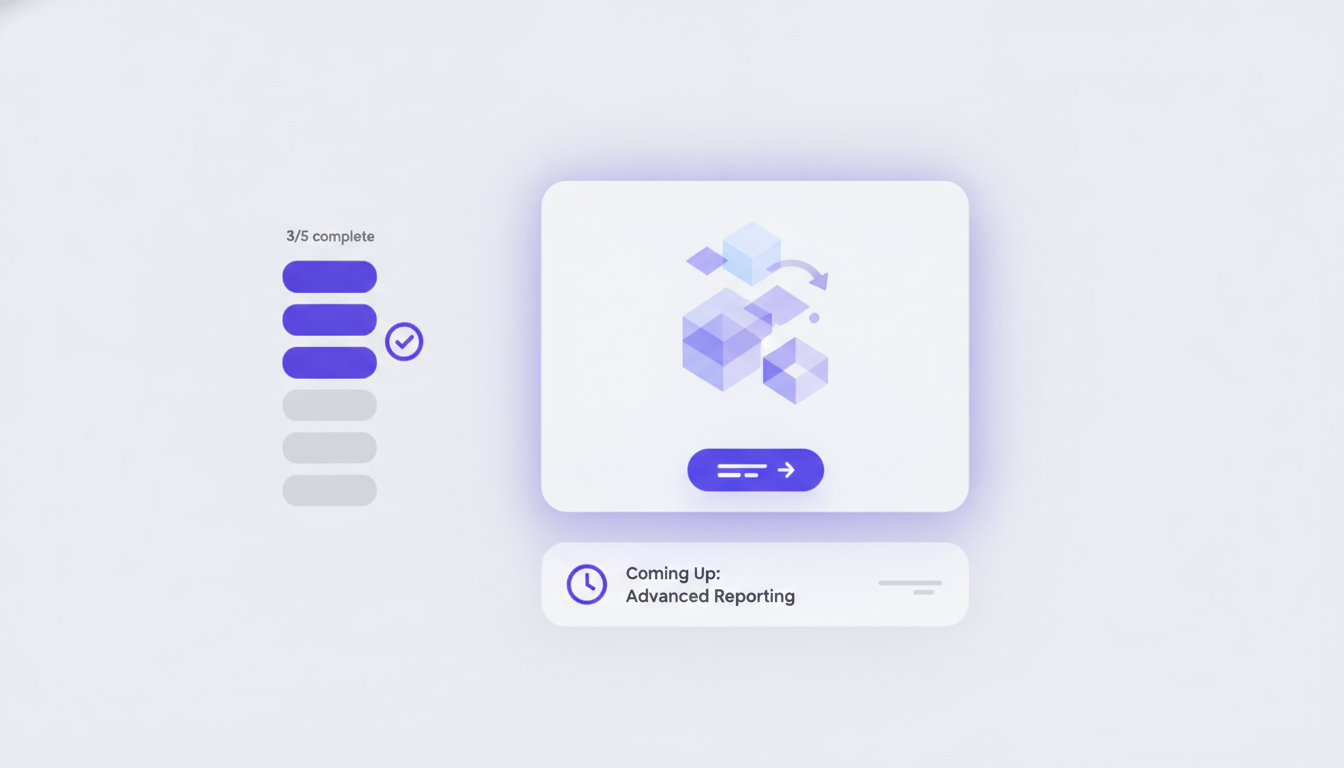
Progress bars are classic for a reason. They show users where they are in a sequence, but, more importantly, they highlight what's left to do. A progress bar that says "3/7 Steps Completed" doesn't just show progress; it creates a mental commitment to finish the remaining four steps. DoBeacon makes it easy to add these visual cues, ensuring users always know where they stand and what's still ahead.
3. Tease Future Features and Advanced Functionality
Sometimes, the best way to get someone to come back is to show them what they're missing. During the initial tour, briefly mention more advanced features that aren't covered yet, framing them as something to "unlock later." This plants a seed of curiosity. You're not expecting them to learn it now, but you're creating an unfinished mental task for them to return to.
- Example: "You've successfully published your first knowledge base article! (That's a big win!) In an upcoming module, we'll explore how to add interactive quizzes to your articles to boost retention even further."
4. Design Intentional Pauses and Off-Ramps
This is perhaps the most counterintuitive part. Our instinct is to keep users on the path until they're done. But what if we deliberately offer a brief pause or a choice to continue later? Acknowledge that the user might need to step away, but clearly signpost how they can resume. "You've just learned how to set up your account. We recommend taking a break here and trying it out. You can always pick up the 'Build Your First Workflow' tour from the help bubble whenever you're ready."
This isn't about letting users off the hook entirely; it's about respecting their cognitive load while ensuring the task remains top of mind. That open loop, that sense of 'I'll get back to that,' is exactly what Zeigarnik identified.
We live in a world that constantly demands our attention, pulling us in a thousand different directions. By designing onboarding experiences that subtly tap into our natural psychological drives, we're not just presenting information; we're creating an engaging narrative that compels users to see it through. With DoBeacon, you're not just building a static walkthrough; you're orchestrating a dynamic, psychologically informed journey that encourages completion and long-term engagement.
Want to put the Zeigarnik Effect to work in your own onboarding? We've put together a handy checklist to guide you through designing tours that truly stick. Download our free "Applying the Zeigarnik Effect to Your Onboarding Flows: A 5-Step Checklist" and start building more engaging learning paths today. You can also explore how DoBeacon makes this all possible at https://dobeacon.com/signup.