
Did you know that for many SaaS products, up to 70% of new users churn within the first 90 days? That's a staggering number, representing countless hours of development and marketing effort lost. It’s a challenge we in product teams grapple with constantly: how do we not just attract users, but genuinely help them stick around and find real value?
The truth is, user churn isn't always about a bad product. Often, it's about a failure to connect users with the value they signed up for, or an inability to help them past those inevitable 'stuck' moments. This is where proactive guidance comes in — it’s about anticipating needs, solving problems before they become roadblocks, and gently nudging users towards success.
What Exactly Is Proactive Guidance?
Think about the best coaches you've ever had, whether it was for a sport, a skill, or even a career. They didn't just wait for you to make a mistake and then correct it. They taught you techniques, pointed out potential pitfalls, and offered advice before you even hit the field or faced the challenge. That's proactive.
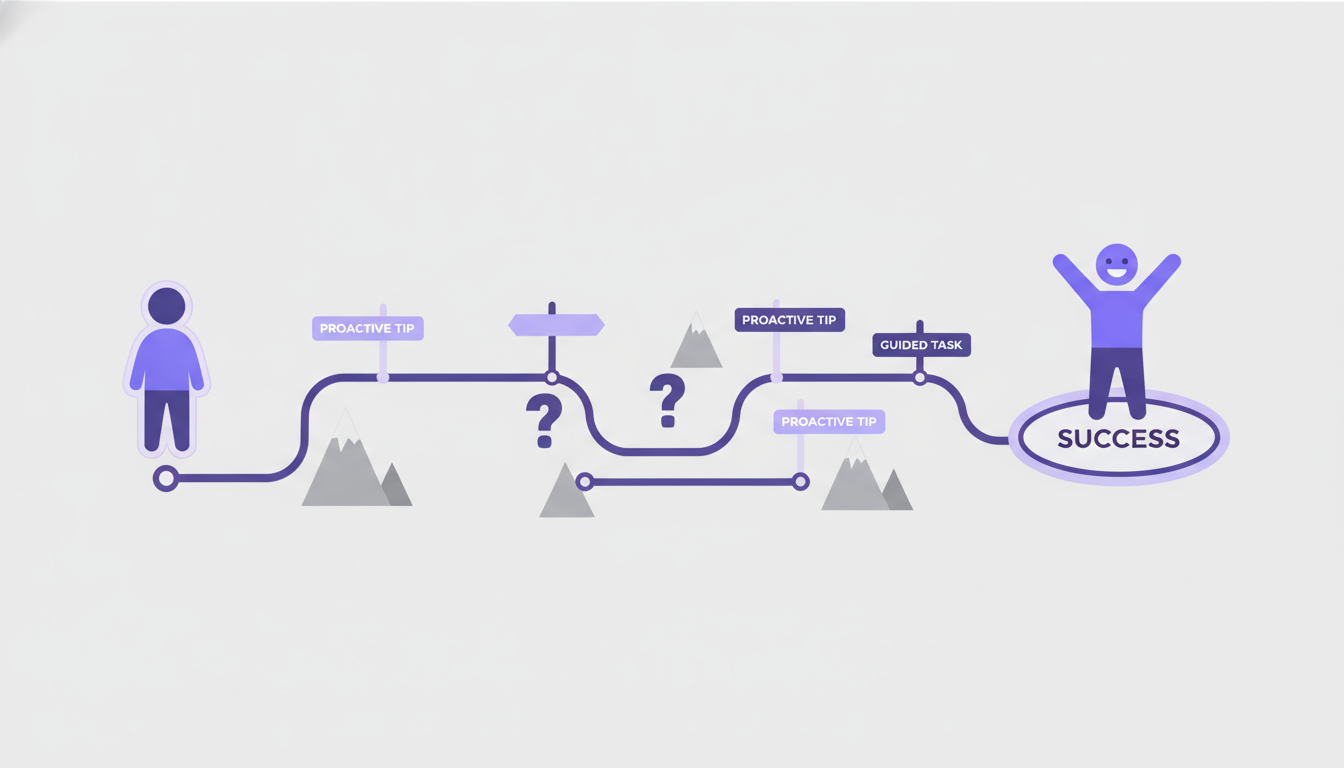
In the product world, proactive guidance is the same principle. It's the deliberate strategy of providing users with the right information, resources, or nudges at the right time in their journey, before they encounter friction or confusion that might lead them to drop off. It’s not just about a robust help center (though those are important!). It's about embedded support, contextual tips, and personalized pathways.
We often see companies pour resources into reactive support — answering tickets, providing live chat, fixing bugs. All of these are essential, of course. But here's a slightly counterintuitive take: waiting for users to actively seek help is often already too late. By the time someone is frustrated enough to open a support ticket, they've likely already spent too much time struggling, and their goodwill might be significantly eroded. Proactive guidance aims to prevent that frustration entirely.
Why Proactive Guidance Wins Against Churn
When you guide users proactively, you're not just solving problems; you're building confidence, demonstrating value, and fostering a sense of mastery. Here's how it combats churn:
- Reduces Time-to-Value (TTV): The faster a user experiences the core benefit of your product, the more likely they are to stay. Proactive guidance streamlines onboarding, pointing users directly to key features that deliver that 'aha!' moment.
- Prevents Frustration: By anticipating common stumbling blocks – say, configuring an integration or setting up a dashboard – and offering help directly within the UI, you cut down on the moments of confusion that lead to disengagement.
- Encourages Feature Adoption: Many users might sign up for a product but only ever use a fraction of its capabilities. Proactive nudges can introduce them to advanced features that unlock deeper value, strengthening their commitment to your tool.
- Builds User Confidence: Successfully completing tasks with a little help fosters a feeling of competence. This positive feedback loop makes users more likely to explore and commit to your product long-term.
A Simple Framework for Product Adoption Leaders
Implementing proactive guidance might sound like a massive undertaking, but it doesn't have to be. We've seen success with a straightforward framework:
-
Map the User Journey: Before you can guide, you need to understand where users go and what they try to accomplish. Identify key milestones: signup, first core action, integration setup, first report generation. Pinpoint the specific moments where users typically get stuck or drop off. Tools like FullStory or Amplitude can be immensely helpful here.
-
Identify Friction Points: This is where you put on your detective hat. Look at your analytics data for drop-offs in specific workflows. Talk to your customer success team – they're on the front lines and know exactly where users struggle. Are users failing to connect their CRM? Are they not understanding how to invite team members? These are your targets.
-
Design Contextual Interventions: This is the heart of proactive guidance. Instead of a generic welcome tour, think about highly specific, in-app experiences. This could be:
- Tooltips & Hotspots: Brief explanations that appear when a user hovers over a new element.
- Walkthroughs & Guides: Short, interactive tours that show users how to complete a specific task, not just explore features.
- Checklists: Simple, progress-driven lists that break down complex onboarding into manageable steps.
- Empty States: When a user encounters an empty dashboard, provide suggestions for what they can do next.
-
Personalize & Segment: Not all users are the same, and not all need the same guidance. A power user might need help with an advanced integration, while a new user needs help with basic setup. Segment your users based on their role, usage level, or journey stage, and tailor your guidance accordingly. This ensures messages are always relevant and helpful, not intrusive.
-
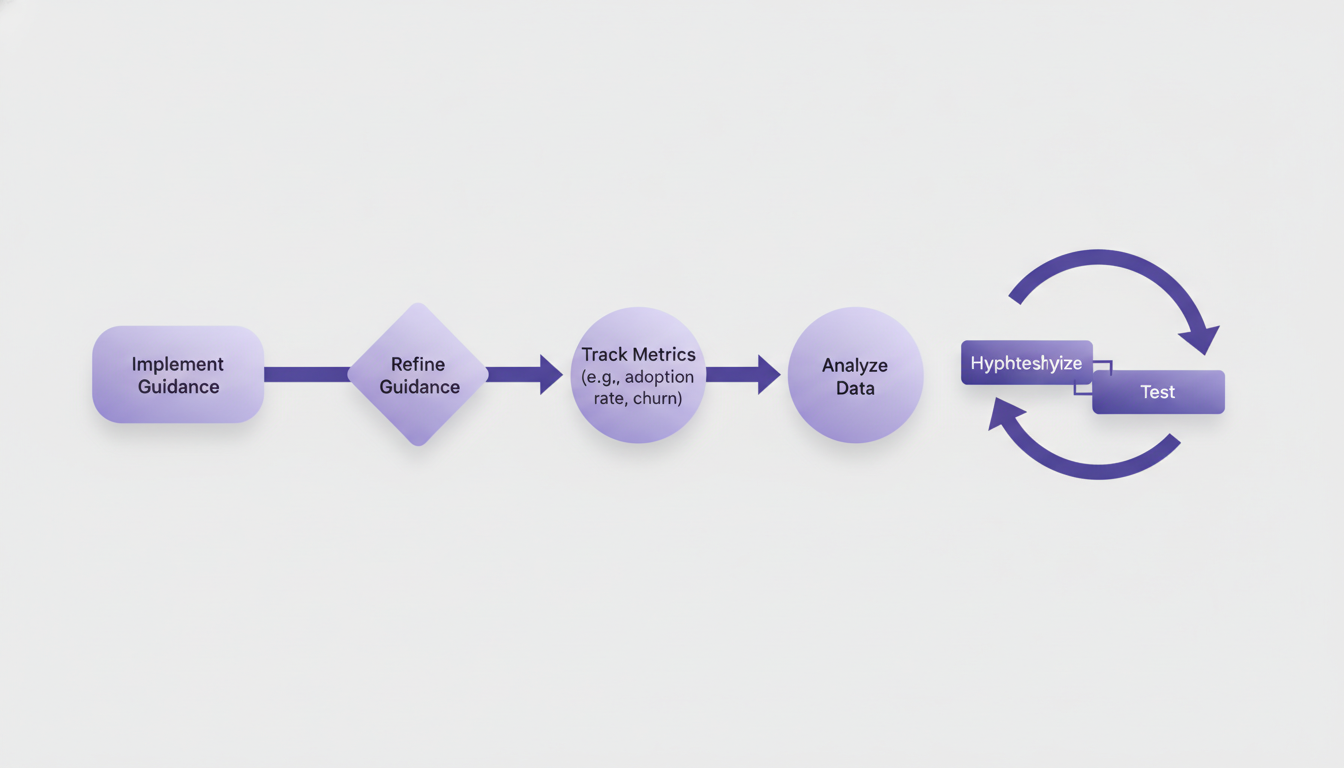
Measure and Iterate: Proactive guidance isn't a 'set it and forget it' solution. Track key metrics like feature adoption rates, time-to-value, and, of course, churn rates related to specific workflows. If your guidance for 'integrating with Salesforce' isn't improving completion rates, then iterate! Try different messaging, different formats, or different triggers.
The DoBeacon Advantage
This framework requires tools that make it easy to deploy, manage, and analyze these contextual interventions without needing constant developer resources. This is precisely where DoBeacon shines. We built DoBeacon to empower product and customer success teams to create these in-app experiences quickly and effectively, freeing up engineers to focus on core product development. It allows you to build those targeted walkthroughs, personalized checklists, and smart tooltips, then track their impact, all from one intuitive platform.
It’s about giving your users a clear path to success, reducing the friction that often leads to early abandonment. By making users feel supported and capable from day one, you're not just preventing churn; you're building a community of empowered, loyal advocates.
We genuinely believe that when users feel capable and understood, they'll stick around longer and achieve more with your product. If you're looking to dive deeper into practical strategies for reducing churn and boosting adoption, we've put together a free resource just for you.
Ready to transform your product adoption? Download our free "Proactive Guidance Checklist for Product Leaders" today and start turning those early struggles into lasting successes. For more tips and resources, don't forget to subscribe to our newsletter! If you're curious to see how DoBeacon can help you implement this framework, you can explore more at https://dobeacon.com/signup.